


 +86 18681836350
  info@monokj.com


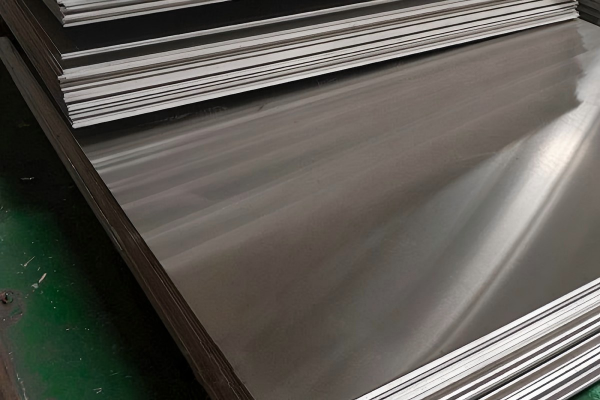
Large fabricated equipment rarely begins with finished components. Pressure vessels, reactor shells, storage tanks and heat exchanger assemblies are all built from flat products before they become complete process equipment. The quality of the plate directly influences forming, welding and long-term service performance throughout the fabrication process.
Hastelloy C276 Plate is manufactured for demanding corrosion-resistant applications where fabricated structures are exposed to aggressive chemical environments. Produced in accordance with ASTM B575 and ASME SB575, it combines outstanding resistance to localized corrosion with excellent weldability, making it one of the most widely specified nickel alloy plates for chemical processing, petrochemical and environmental engineering projects.
The choice of plate is usually driven by how equipment will be manufactured rather than by the alloy alone. Large vessels, reactors and fabricated process systems require materials that can be cut, formed and welded while maintaining consistent corrosion resistance across extensive welded structures.
Hastelloy C276 Plate is commonly selected when fabrication quality and corrosion performance are equally important. Its balanced properties allow manufacturers to produce pressure-retaining equipment, structural assemblies and custom-fabricated components capable of operating in aggressive process environments over extended service periods.
Typical Selection Criteria
Fabricated pressure vessels
Reactor shells and chemical storage tanks
Heat exchanger components
Heavy welded structures
Chloride-containing process environments
Compliance with ASTM B575 material requirements
Parameter | Range & Options |
Product forms | Plate, Sheet, Flat Plate |
Standards | ASTM B575, ASME SB575, EN 10028‑2, GB/T 15007 |
Alloy | Hastelloy C276 (UNS N10276 / W.Nr. 2.4819) – Ni‑Mo‑Cr alloy |
Thickness (plate) | Hastelloy C276 Plate 3mm, 6mm, 10mm, 20mm – up to 50mm |
Thickness (sheet) | Hastelloy C276 Sheet 1mm, 2mm, 3mm – down to 0.5mm |
Sheet size | Hastelloy C276 Sheet 4x8 (1220x2440mm), 1000x2000mm, 1500x3000mm |
Processes | Hot rolled (plate), cold rolled (sheet), pickled, polished, precision ground |
Surface finish | Pickled (standard), polished (single/double side), ground, as‑rolled |
Customization | Custom size, cut to size, precision ground, pressure vessel plate material |
1. Pressure Vessels & Reactor Fabrication
Pressure-containing equipment is often manufactured from multiple formed plates joined by full-penetration welds. ASTM B575 Hastelloy C276 Plate is widely specified for reactor vessels and pressure equipment because it maintains excellent corrosion resistance across welded fabrications exposed to aggressive process media.
Plate flatness and dimensional consistency also influence fabrication efficiency. Reliable material quality helps reduce forming corrections while supporting accurate assembly during vessel manufacturing.
Where projects involve large shell sections and structural reinforcements, using one consistent material specification simplifies inspection and traceability throughout fabrication.
2. Heat Exchangers & Process Equipment
Heat exchangers frequently combine elevated temperatures with corrosive fluids, creating demanding service conditions for fabricated components. Hastelloy C276 Sheet is commonly used for covers, channel plates and structural assemblies requiring dependable corrosion resistance together with good fabrication performance.
Fabricated process equipment often undergoes extensive cutting, forming and welding before installation. Stable material characteristics help manufacturers maintain production efficiency while reducing the risk of post-fabrication corrosion issues.
Selecting compatible plate materials across the entire assembly also supports long-term maintenance planning and replacement consistency.
3. Flue Gas Desulfurization & Environmental Systems
Wet scrubbers and flue gas desulfurization units operate in environments containing acidic condensates and chloride-bearing solutions. Alloy C276 Plate is regularly selected for absorber linings, ductwork and internal structures where resistance to localized corrosion contributes to longer equipment life.
Environmental systems typically contain large fabricated sections produced from heavy plate. Good weldability and stable corrosion performance simplify manufacturing while supporting reliable operation under continuous process conditions.
Using the same alloy throughout major fabricated components also helps reduce maintenance complexity over the life of the installation.
4. Petrochemical & Offshore Fabrication
Process plants and offshore facilities require fabricated equipment capable of operating under changing chemical conditions while meeting strict quality requirements. UNS N10276 Plate is commonly processed into storage tanks, separators and structural components serving corrosive production environments.
Many engineering projects require plates to be supplied in custom dimensions before fabrication begins. Precision cutting and project-specific processing help reduce workshop preparation time and improve overall manufacturing efficiency.
Plate procurement extends beyond selecting the correct alloy grade. Thickness tolerance, flatness, surface condition and available processing services can significantly influence fabrication costs once production begins.
Clarifying these requirements before placing an order allows materials to arrive ready for forming, welding or machining, helping reduce workshop preparation time and improve production scheduling across large fabrication projects.
Q: What standard is commonly used for Hastelloy C276 Plate?
A: ASTM B575 and the equivalent ASME SB575 are the most widely referenced specifications for Hastelloy C276 plate and sheet products.
Q: What industries typically use Hastelloy C276 Plate?
A: Typical applications include chemical processing, petrochemical plants, oil and gas, pressure vessels, heat exchangers, flue gas desulfurization systems, pharmaceutical equipment and marine engineering.
Q: Can Hastelloy C276 Plate be welded?
A: Yes. The alloy offers excellent weldability and is widely used in large fabricated structures requiring extensive welding.
Q: What processing services are available?
A: Precision cutting, laser cutting, water jet cutting, CNC machining and custom sizing can all be provided according to project requirements.
Q: Is heavy thickness plate available?
A: Yes. Standard thicknesses as well as heavy thickness plates can be supplied depending on project specifications.
Fabrication projects often begin long before the first weld is made. Material dimensions, cutting methods, inspection documents and delivery sequencing all influence how efficiently plates move from storage into production.
Mono supports manufacturers by supplying plates in standard or project-specific dimensions together with processing services that reduce preparation work at the fabrication stage. Coordinating material supply before production starts helps improve workflow, minimize unnecessary handling and maintain consistency across complete equipment packages.
Whether the requirement involves a single replacement plate or a multi-vessel engineering project, our focus is to provide materials that integrate smoothly into fabrication rather than adding extra work after delivery.