


 +86 18681836350
  info@monokj.com




1.Lifting conveyor belt
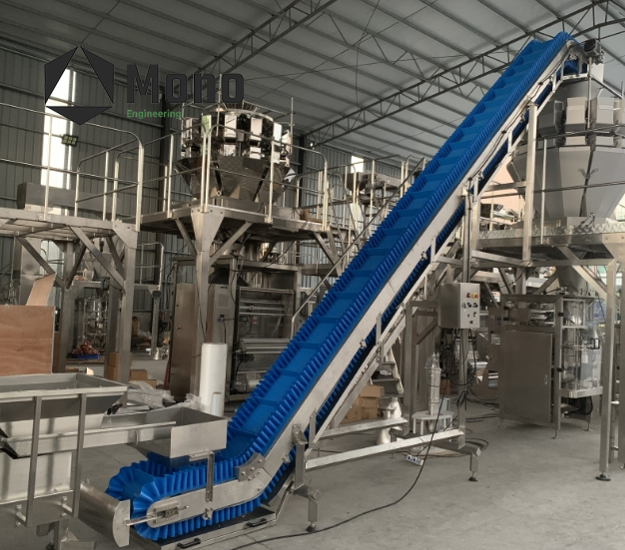
A lifting conveyor belt, also known as an inclined conveyor or elevator conveyor, is designed to transport materials vertically or at an angle between different heights within a production line. It is an essential solution for improving automation efficiency and reducing manual handling in modern industrial processes.
Lifting conveyor belts are typically manufactured using high-quality materials such as PVC, PU, rubber, or stainless steel, and can be customized with cleats, sidewalls, or buckets to prevent material slipping during elevation. Their robust structure ensures stable and continuous operation, even in demanding environments.
Types of Lifting Conveyor Belts
•Inclined Belt Conveyor– Suitable for general material lifting
•Cleated Conveyor Belt– Equipped with cleats to prevent product rollback
•Sidewall Conveyor Belt– Designed for steep angles and bulk materials
•Bucket Elevator Conveyor– Ideal for vertical lifting of granular or loose products
Parameter
Conveying capacity: 6 (t/h)
Power: 1.1 (KW)
Conveying distance: 6 (m)
Dimensions: 6 * 0.6 * 0.8 (m)
Weight: 500 (kg)
Applicable field: Food processing material conveying
Material: Stainless steel
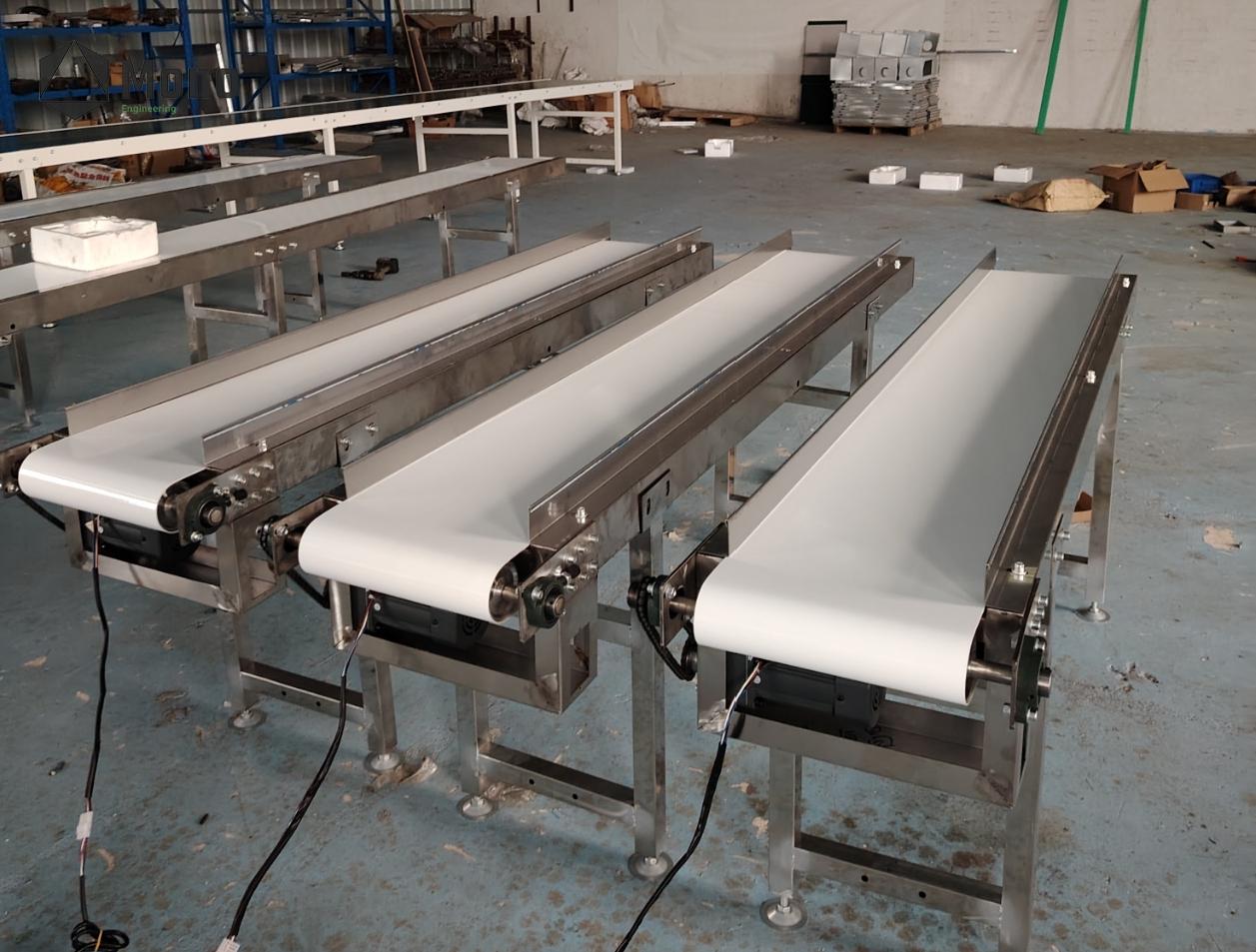
2.Horizontal Belt Conveyor belt
Apply for the horizontal transportation of tomatoes, strawberries, apples, pears, apricots, carrots and other fruits, or for the lifting transportation of fruits and vegetables that are difficult to slide, such as Pickled vegetables)
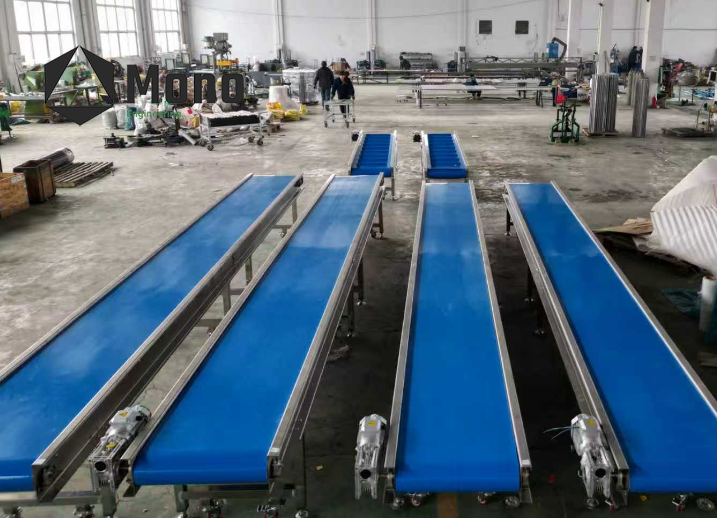
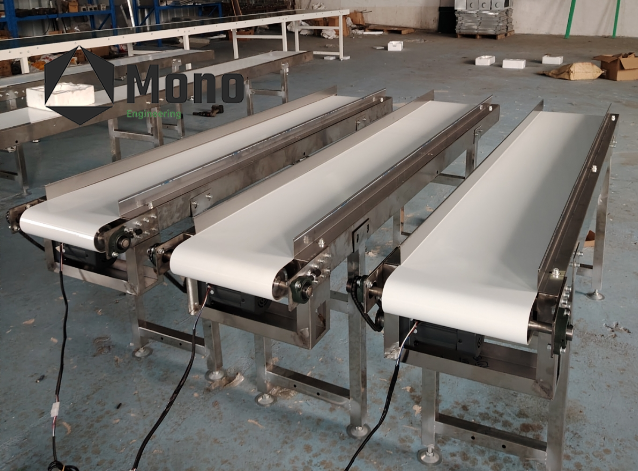
horizontal Belt conveyors are suitable for transporting irregular items, bulk materials, and parts with height differences. They are equipped with workbenches on both sides of the belt conveyor, and the working rhythm is characterized by disorder.
Forms: horizontal conveying and lifting belt . This equipment is used for the horizontal transportation of tomatoes, strawberries, apples, pears, apricots, carrots and other fruits, or for the lifting transportation of fruits and vegetables that are difficult to slide, such as Pickled vegetables, and can add a stainless steel picking platform for selection or processing. Single layer, double-layer, three-layer, etc. can also be selected according to product requirements to match the characteristics of different materials.
Parameter
Effective width: 300-1200mm
Elevation angle:< 45°
Single driver length limit: 1000-10000mm
Conveyor speed: maximum 32m/min (adjustable)
Motor power: 0.18 Kw/0.37 Kw/0.55 Kw/0.75 Kw/1.1 Kw/1.5 Kw/2.2 Kw
3. Electric horizontal spiral conveyor belt
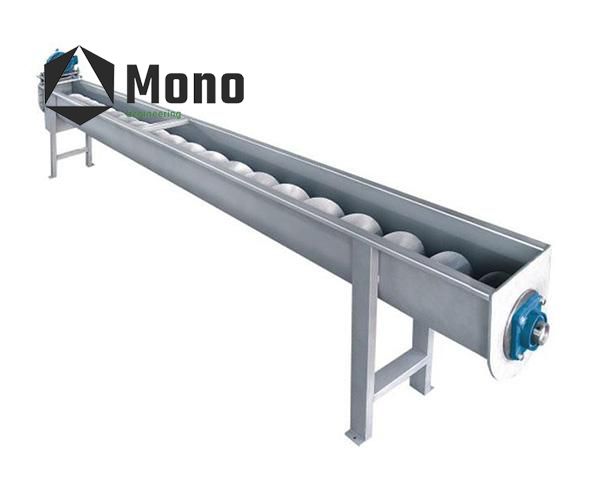
This equipment is a mechanical device that uses a reducer to drive a spiral rotation and push materials to achieve conveying purposes. It has the advantages of simple structure, small cross-sectional area, easy enclosed conveying, and can be used for multi-point feeding or unloading.
Shell form: "o" or "u" shape;
Spiral form: shaftless, single axis or multi axis;
Large carrying capacity, safe and reliable.
Strong adaptability, easy installation and maintenance, and long service life.
The whole machine has a small volume, high speed, and ensures fast and uniform conveying.
The discharge end is equipped with a cleaning device, which has low overall noise, strong adaptability, and flexible layout of the inlet and outlet positions.
Good sealing performance, the shell is made of seamless steel pipe, and the ends are connected to each other with flanges to form a whole, with good rigidity.
Parameter
Effective width: 200-400mm
Elevation angle: ≤ 45°
Single driver length limit: 1000-10000mm
Conveyor speed: maximum 27m/min (adjustable)
Motor power: 0.37/0.55/0.75/1.1/1.5/2.2Kw
4.Stainless steel Wire mesh conveyor belt
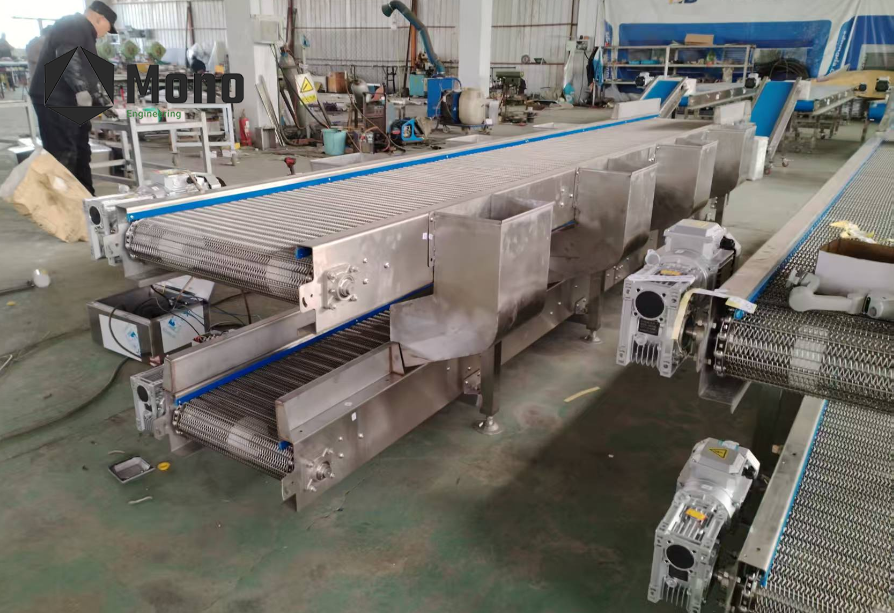
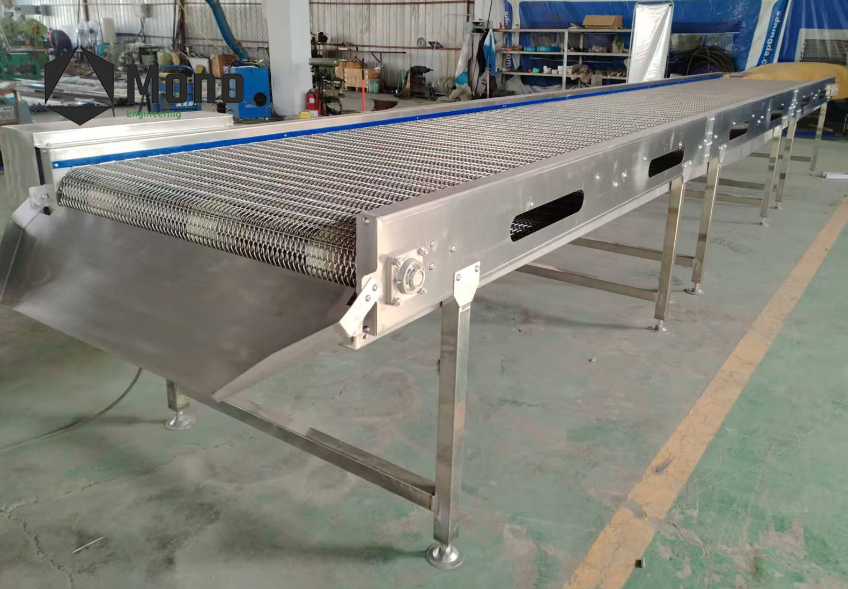
Our stainless steel wire mesh conveyor belts are manufactured from high-quality, food-grade SS304 or SS316 materials, ensuring excellent performance in demanding industrial environments. They offer outstanding resistance to high temperatures, corrosion, and wear, making them highly reliable for long-term operation.
These conveyor belts are widely used in a variety of processing applications, including heat treatment, drying, cooling, freezing, washing, dewatering, and material handling across multiple industries.
The unique open mesh structure allows for optimal airflow and drainage, while minimizing the contact surface between the belt and the product. This design not only improves processing efficiency but also reduces the risk of product contamination or damage.
Parameter
Effective width: 300-1200mm
Elevation angle: ≤ 45°
Single driver length limit: 1000-10000mm
Conveying capacity: 15Kg/m
Conveyor speed: maximum 25m/min (adjustable)
Motor power: 0.18 Kw/0.37 Kw/0.55 Kw/0.75 Kw/1.1 Kw/1.5 Kw/2.2 Kw
Production capacity: 2.5, 3, 5, 10, 20, 30T/h;
Height increase: determined according to user requirements;
stainless steel wire mesh conveyor belts Equipped with a continuously variable transmission, the speed of the conveyor chain can be adjusted for easy connection;
5.Turning conveyor belt
A turning conveyor belt, also known as a curved conveyor belt or radius conveyor belt, is specifically designed to transport products smoothly along curved paths within a production line. It plays a critical role in optimizing factory layouts by enabling efficient directional changes without interrupting product flow.
Manufactured from high-quality materials such as PVC, PU, or modular plastic, turning conveyor belts are engineered for durability, flexibility, and stable operation. Their precise design ensures consistent tracking and minimal product shifting, even when navigating tight curves.
With advanced construction and reliable performance, turning conveyor belts are widely used in automated production and packaging systems where space efficiency and continuous movement are essential.
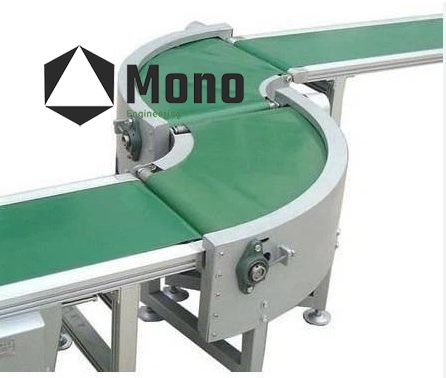
The curved conveyor belt adopts a triangular belt transmission method, which can achieve forward and reverse operation.
Parameter
model | Roller width | Conveyor width | angle | Speed |
600W | 600 | 700 | 30,45,60,90 | 0-120m/min |
750W | 750 | 850 | ||
800W | 800 | 900 |
Why Choose a Turning Conveyor Belt?
Turning conveyor belts are the perfect solution for production lines that require directional changes without compromising efficiency. By reducing manual handling and maximizing space utilization, they help improve overall productivity and streamline operations.